Cross Docking in 3PL Partnerships: What to Expect
Cross docking sits in that practical middle ground between theory and the loading dock. It is not a silver bullet, and it is not new, but when a shipper and a third‑party logistics provider lean into it with the right constraints and data, it can remove days from lead times and thousands from carrying costs. The shape of the benefits depends on the network, the order mix, and the culture of the partners. If you are evaluating cross docking services with a 3PL, here is what the work really looks like, where the cost and risk live, and how to tell if your operation is a good fit.
What cross docking really means on the floor
At its simplest, cross docking is the planned handoff of product from inbound transportation to outbound transportation without storing it. That definition leaves room for a lot of variation. A cross dock facility can be a few doors at a regional terminal where cartons are re‑labeled and moved across the floor within an hour, or it can be a dedicated wing of a cross dock warehouse that handles dozens of inbound trailers and a nightly wave of outbound linehauls.
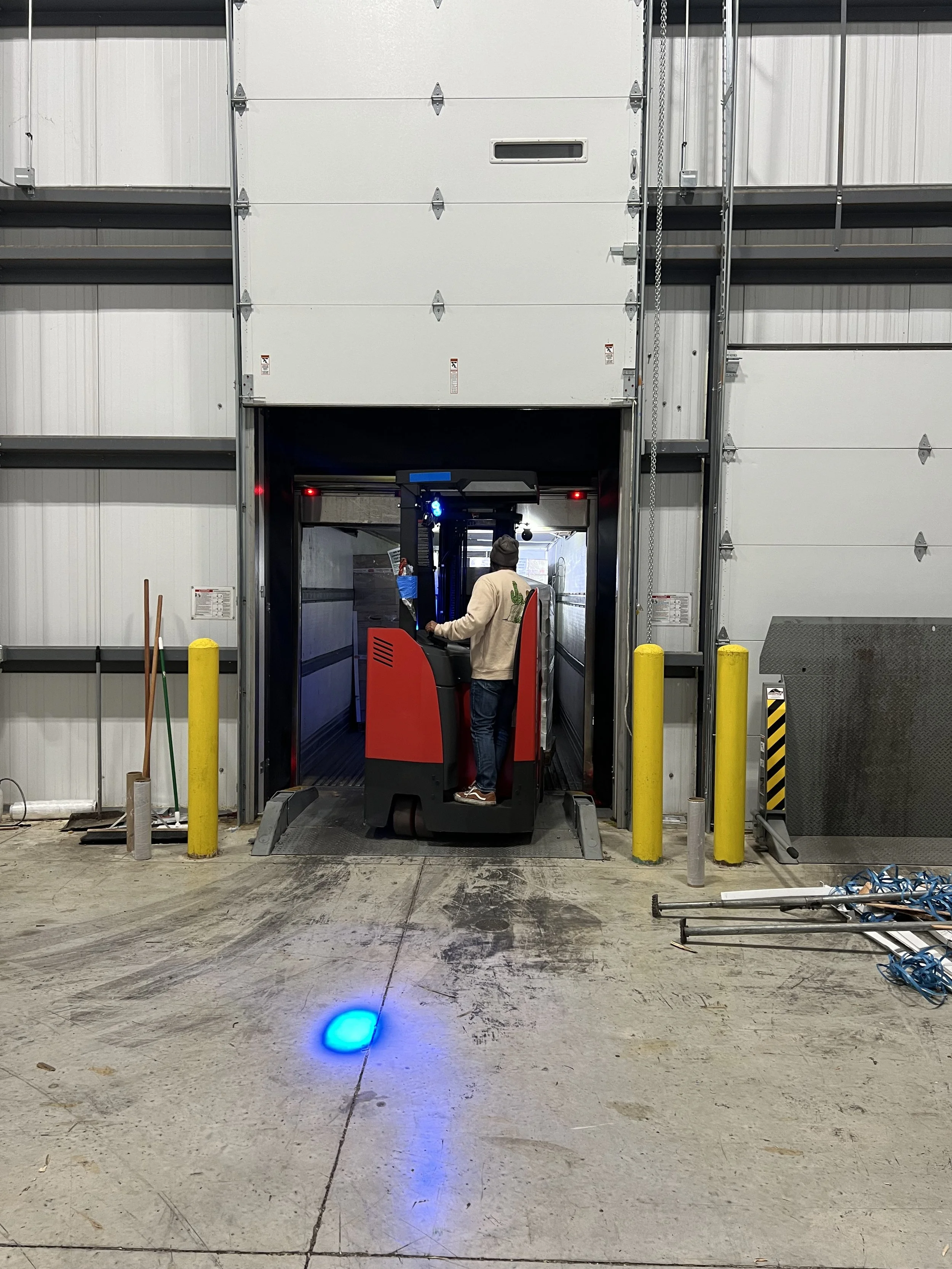
The mechanics look like this. An inbound trailer arrives with a mixed load that has already been allocated in the warehouse management system. The driver checks in, a door is assigned, the freight is unloaded to the dock, scanned, and routed to the right staging lane. Ideally, outbound trailers are already pre‑planned and pre‑staged. Freight never enters racked storage, and the target is a turn time measured in hours, sometimes minutes for parcel‑bound goods.
Two details matter more than most outsiders realize. First, labeling: many cross dock failures come from incorrect or nonstandard labels, which forces the dock to stop and rework. Second, information timing: if the advanced shipment notice lands after the truck, the team ends up playing catch‑up with allocation and routing on the fly, and dwell time creeps upward.
When cross docking makes economic sense
The unit economics hinge on three drivers: inventory carrying cost avoided, handling cost added, and transportation efficiency gained. If the goods are slow‑movers or destined for long‑term stocking, cross docking rarely pays. If the goods have short shelf life, seasonal windows, or are pre‑allocated to downstream nodes or stores, it often does.
In a consumer electronics rollout I supported, we used a cross dock warehouse in the Midwest to accept full truckloads from Asia‑sourced vendors. The goods were pre‑ticketed with store destinations. We unloaded, validated counts, and loaded nightly multi‑stop TL routes to 120 stores. Average dwell was four hours, and we avoided two touches per unit compared to a receive‑putaway‑pick model. Shrink stayed under 0.2 percent across the quarter because the product never sat in open racks.
Many shippers see material gains when they consolidate parcel into zone‑skipping linehauls. A cross dock facility in the right region can pull in parcel‑bound cartons from several vendors, load them to a linehaul, and inject them deeper into the carrier network. The 3PL charges for the dock handling and the linehaul, but the shipper saves on parcel zone costs and can hit more consistent delivery windows.
Flow types you will encounter
Cross docking is not one thing. Your 3PL may use different modes depending on your order mix and service promises.
-
Flow‑through: vendor‑prepped cartons or pallets flow inbound to outbound with minimal intervention. This shines for retail allocations where each case is already ticketed to a store.
-
Consolidation: small inbound shipments from multiple vendors get combined to build efficient truckloads or to fill parcel cages for a deep‑zone injection. It reduces per‑unit freight and improves delivery density.
-
Deconsolidation: a full truckload from a single origin is broken into multiple outbound loads for different regions or customer groups. This is common after port drayage into a central cross dock.
-
Value‑added cross dock: the dock performs light prep, such as slap‑and‑ship labeling, kitting of two or three SKUs, or compliance labeling for retail. The line between cross docking and light assembly gets blurry here, and the SLA must adjust to that reality.
These modes can live in the same building, but the process design and metrics vary. Flow‑through is brutally simple, and the service time target can be under two hours. Value‑added flows take longer and cost more, but they save you from keeping a separate kitting operation.
What a 3PL evaluates before switching on cross docking
A competent 3PL will not accept every cross docking program as proposed. They will test for fit across data, packaging, and cadence. Expect to cover the following ground during discovery.
-
Pre‑allocation and data fidelity. The 3PL needs the advanced shipment notice with line‑level accuracy, preferably before the truck closes at the origin. If orders are fluid or allocation happens after arrival, the dock becomes a buffer, not a true cross dock.
-
Packaging and unitization. Pallet quality, carton integrity, and label readability drive speed. Inbound pallets that are loose, overhang, or mix SKUs will trigger rework on the dock, which erodes savings.
-
Volume patterns. Cross docks thrive on predictable waves. If arrivals are spiky and the outbound window is narrow, you need surge labor or staging space, both of which cost money.
-
Destination density. The best returns come when outbound builds to the same lanes daily. If outbound is fragmented into many small destinations, linehaul economics can fall apart.
-
Exceptions tolerance. Every cross dock has a plan for shorts, overs, and damages. Your policy on splits, partial fills, and backorders shapes the dock’s handling rules. Clarity matters more than optimism.
The final go‑live plan typically includes a pilot lane or product family, daily scorecards, and a ramp period where both sides adjust carton markings, ASN timing, and cut‑off times.
What the day‑to‑day looks like with a 3PL partner
On the ground, the rhythm of a cross dock warehouse runs on cut‑offs. Inbound cut‑offs protect the outbound dispatches. Dispatch times drive route promises and parcel injections. The best performing operations publish a dock schedule by door, by hour, and flex it as reality deviates.
The 3PL’s operations lead will keep a simple playbook: doors and lanes are assigned to destinations or carriers, handheld scanners drive scans at unload and load, and exceptions get parked in a red zone with a supervisor. Throughout the day, the team watches a “work to go” dashboard that shows inbound volume versus outbound capacity by lane.
Communication keeps the friction down. We used a three‑message rule: one note when the truck is booked, one when the truck departs origin, and one when it checks in at the cross dock facility. That cadence gave us room to pull labor forward or push a route departure by 30 minutes if a key load was delayed. With that consistency, average dock dwell fell by 25 percent within six weeks.
Technology you should expect to see
If a 3PL offers cross docking services, they should be fluent in a few systems and integrations. You do not need a sprawling tech stack, but you need the right seams stitched tightly.
-
WMS or dock management module that supports planned cross dock moves, not just storage moves. Look for system‑directed routing to lanes, carton‑level scanning, and load building tied to outbound manifests.
-
TMS that plans and tenders outbound linehauls or parcel injections with realistic cut‑offs, and that can replan quickly when inbound shifts.
-
EDI or API feeds for ASNs and order allocation. The two documents that matter most are the 856 (ASN) and the 940/945 for outbound allocation and confirmation. If you prefer APIs, the payloads should include carton identifiers, destination, and required value‑added steps.
-
Scan‑to‑manifest at the door. Every case or pallet should get a positive scan into the outbound load. That protects you, your 3PL, and your customers when shortages surface.
-
Exception capture with photos. Damaged cartons and count discrepancies should be recorded with images. It speeds claims and teaches upstream vendors how to pack better.
Some operations add yard management with real‑time trailer status to align dock assignments with priority unloads. If your inbound yard is regularly full, that upgrade pays back quickly.
Service levels and metrics that actually predict performance
You can drown in cross docking san antonio tx cross dock metrics. A tight set tells the story and gets action.
-
Dock‑to‑dock time. The average hours from inbound unload complete to outbound load start, segmented by flow type. Target ranges depend on the mode: two to four hours for flow‑through, four to eight hours for value‑added.
-
On‑time departures. Percent of outbound loads dispatched at or before the committed time. This links directly to your delivery promise and to parcel carrier cut‑offs.
-
Scan compliance. Percent of cartons with both inbound and outbound scans. Anything under 99.5 percent demands root cause work.
-
Exception rate. Percent of cartons flagged for damage, overage, shortage, or rework. High rates point to upstream packaging or labeling issues.
-
Cost per unit handled. Total dock labor and accessorials divided by units. Track it by vendor and by destination to identify outliers and target continuous improvement.
Ask for a weekly review during the ramp period that shows these metrics with vendor and lane breakouts. After stabilization, monthly reviews typically suffice, but spike weeks deserve quick postmortems.
The cost structure, without the mystery
Pricing for cross docking services usually sits on a few pillars: accessorials per unit or per pallet handled, hourly labor for value‑added services, and storage if the freight overstays the cross dock window. Transportation charges for outbound are separate, either as pass‑through linehauls or as parcel injection fees plus small parcel carrier charges.
A reasonable per‑pallet handling fee at scale sits in the single digits to teens in dollars, depending on touches and the market. Per‑carton fees might range from tens of cents to just over a dollar when scans and relabeling are involved. Value‑added steps like kitting, ticketing, or UCC‑128 rework bill as hourly labor, often with a minimum per job.
Beware two traps. First, lack of clarity on what counts as “cross dock” versus “short‑term storage.” Some facilities apply storage charges after 24 hours, others after midnight cut‑off. Align definitions in writing. Second, “emergency rework.” If your inbound packaging routinely triggers re‑palletization, the labor burn will eat your savings. Fix the upstream packaging instead of normalizing the fee.
Network design choices that amplify the value
Cross docking works best when it aligns with a clear network purpose. A few patterns show up repeatedly.
A single national cross dock near key parcel hubs makes sense for e‑commerce brands doing zone‑skip injections. You pull in multi‑vendor inbound flows by day, linehaul to carrier hubs by night, and tighten delivery windows to two to three days nationwide.
A set of regional cross dock facilities pays off when you serve wholesale or retail doors that require appointment delivery. You deconsolidate post‑port into East, Midwest, and West, then build milk runs for store deliveries. Appointment performance improves because you control the last‑mile schedules.
Seasonal programs benefit from pop‑up cross docks. During back‑to‑school or holiday peak, a temporary facility near a high‑volume region absorbs the surge, preserves core DC performance, and rolls down after the peak. It is hard to justify a permanent node for eight weeks of need, but a pop‑up lets you flex without breaking your main warehouse.
The people side: roles and accountability
Successful cross docking partnerships rely on crisp roles. On the 3PL side, the operations manager owns dock throughput, labor, and safety. The transportation planner owns outbound capacity and cut‑off adherence. A customer success or program manager stitches these together and runs the business review cadence.
On the shipper side, appoint a single operations counterpart who can make allocation and exception decisions daily. If that person does not have the authority to release partials, approve label changes, or tweak routing rules, the dock will stall over avoidable questions. Give the frontline team a clear escalation tree with time thresholds. For example, if a critical inbound misses by more than 90 minutes, the planner can hold a route up to 30 minutes. Beyond that, the program manager decides whether to split the load or reassign.
Culture matters. The best docks feel like a well‑run restaurant kitchen: everyone knows the next ticket, calls their counts, and moves with purpose. You get that by keeping the plan visible and removing clutter. You lose it when exceptions pile up in the wrong corners.
Pitfalls that derail cross docking, and how to avoid them
Most cross dock headaches trace back to predictable sources. A few stand out.
Late or incomplete ASNs force on‑dock triage. If your vendors cannot deliver accurate line data before departure, require carton‑level labels with scannable destinations. In one apparel program, we split the vendor base into green and red tiers. Green vendors sent clean ASNs and earned relaxed booking cut‑offs. Red vendors faced earlier cut‑offs and a per‑carton rework fee until their data improved.
Vague ownership of damage and shortage claims leads to friction. Decide up front which events are carrier liability versus vendor packaging. Require photos at the dock and push those upstream weekly as a learning loop.
Ambitious value‑added asks sink SLAs. Kitting ten components at the dock turns a flow‑through process into a mini factory. If turnaround is critical, move complex kitting upstream or allow a longer dwell target. Do not hide the complexity inside the same metric set.
Holiday peaks expose untested schedules. Put your peak calendar on the wall by September. Increase outbound dispatch frequency while you can still book linehaul capacity. In a beverage program, we added a 10 p.m. dispatch for four weeks, which shaved a day off delivery for 40 percent of orders without changing the day shift.
How to prepare your operation for a smooth start
Shippers often forget that the easiest savings come from upstream tweaks. You can make your 3PL look brilliant by correcting three or four details before go‑live.
Standardize labels. Use a single, scannable carton label that carries destination, PO, SKU count, and a unique identifier. Place it on two adjacent sides. Ask for a sample from the 3PL so your label format aligns with their scanners.
Tighten pallet rules. Define maximum height, shrink‑wrap pattern, and overhang tolerance. Overhanging pallets break product and slow unload. If your vendors resist, show them exception photos from a pilot.

Commit to ASNs with cut‑offs. Write down the time, in local time at origin, when the ASN must be transmitted for a given dispatch. Make it part of your vendor routing guide. If a vendor cannot meet it, track that as a supplier scorecard metric.
Agree on the playbook for shorts and splits. When a truck arrives short, do you ship the partial to meet a launch date, or do you hold and combine? The correct answer varies by product, customer, and season. Document the choices as rules, not as case‑by‑case debates.
A short, practical checklist before you sign
-
Ensure your 3PL can support carton‑level scan‑to‑manifest with photo exceptions.
-
Validate that your vendors can send ASNs before departure, not after arrival.
-
Walk the cross dock facility and watch a full unload‑stage‑load cycle.
-
Align on cut‑offs, dwell targets, and storage thresholds in the MSA and SOW.
-
Pilot a narrow SKU set or lane for two to four weeks with daily scorecards.
How timelines usually unfold
From handshake to steady state, a realistic timeline spans six to ten weeks. Week one, you exchange data specs and label standards. Week two and three, you test EDI or APIs with sample loads. Week four, you run a pilot on a small lane, often one vendor and one destination. You meet daily, adjust cut‑offs or labeling, and fix scanning gaps. Week five and six, you add lanes and shift to weekly reviews. If the metrics hold, you scale. Faster ramps are possible, but they usually trade away learning time and cause more turbulence later.
On the first day of live operations, do not expect perfection. Expect visible leadership on the dock, handheld radios working, and an open channel between your allocation team and the 3PL planner. You will find a few labels that do not scan, a destination that changed after the ASN, or a trailer that arrived with mixed pallets despite the routing guide. Treat the first week as structured problem solving, not as pass‑fail.
Compliance and safety are not optional
Cross docks move fast, which can tempt bad shortcuts. A strong safety culture protects people and product. Look for painted pedestrian lanes, staged cones around active forklifts, and a clean floor. In a good operation, the supervisor refuses to rush an unload without chocks and a locked dock plate, even under pressure. Ask about near‑miss reporting. A facility that tracks near‑misses diligently tends to run cleaner, faster docks because they think in systems.
On the compliance side, retail programs often require specific SSCC labeling, pallet height, and tide‑times for delivery at distribution centers. Your 3PL should maintain a living cheat sheet for each major retailer. Push them to share updates within 24 hours when a retailer changes a rule. Avoid learning through chargebacks.
How to tell if you have outgrown a cross dock
Cross docking is a tool. It fits certain phases of growth and certain product profiles. You know you have outgrown a specific setup when outbound leaves half‑empty because destination density got too thin, when value‑added steps take longer than a standard pick‑pack, or when your order variability demands more buffer than a cross dock can reasonably provide. At that point, options include hybridizing with a small forward pick area, adding a second regional cross dock facility to restore density, or moving a product family into a conventional DC.
In one CPG portfolio, we ran ambient and refrigerated goods through the same cross dock during a market launch. As volumes matured, refrigerated product stabilized into predictable store routes and stayed in the cross dock, while ambient moved to a nearby DC where we could hold inventory and batch pick promotions. The split reduced dock congestion by a third and improved on‑time delivery for both lines.
Final guidance for selecting a 3PL partner
When you evaluate 3PLs, go beyond the brochure. Walk the building during active shifts. Ask to see the live dock schedule and the exception board. Take a handheld and scan a carton into a mock outbound load. If a manager hesitates, either the process is not mature or transparency is lacking.
Look for candor about trade‑offs. A partner who tells you they can cross dock anything at any speed is selling, not operating. A partner who asks for specific carton label changes, offers a draft vendor guide, and proposes a contained pilot is preparing to run your freight, not just win your business.
The most useful promise you can get is not magical speed; it is stability. A cross dock that hits the same cut‑offs every night, with clear exceptions and clean scans, will make your downstream commitments more reliable. That reliability, not spectacle, is what good cross docking services deliver when done right.
Business Name: Auge Co. Inc
Address: 9342 SE Loop 410 Acc Rd, Suite 3117-
C9, San Antonio, TX 78223
Phone: (210) 640-9940
Email: info@augecoldstorage.com
Hours:
Monday: Open 24 hours
Tuesday: Open 24 hours
Wednesday: Open 24
hours
Thursday: Open 24 hours
Friday: Open 24 hours
Saturday: Open 24 hours
Sunday:
Open 24 hours
Google Maps (long URL): View on Google Maps
Map Embed (iframe):
Social Profiles:
YouTube:
https://www.youtube.com/channel/UCuYxzzyL1gBXzAjV6nwepuw/about
Auge Co. Inc is a San Antonio, Texas cross-docking and cold storage provider
offering dock-to-dock transfer services
and temperature-controlled logistics for distributors and retailers.
Auge Co. Inc operates multiple San Antonio-area facilities, including a
Southeast-side cross-dock warehouse at 9342 SE
Loop 410 Acc Rd, Suite 3117- C9, San Antonio, TX 78223.
Auge Co. Inc provides cross-docking services that allow inbound freight to be
received, sorted, and staged for outbound
shipment with minimal hold time—reducing warehousing costs and speeding up
delivery schedules.
Auge Co. Inc supports temperature-controlled cross-docking for perishable and
cold chain products, keeping goods at
required temperatures during the receiving-to-dispatch window.
Auge Co. Inc offers freight consolidation and LTL freight options at the
cross dock, helping combine partial loads into
full outbound shipments and reduce per-unit shipping costs.
Auge Co. Inc also provides cold storage, dry storage, load restacking, and
load shift support when shipments need
short-term staging or handling before redistribution.
Auge Co. Inc is available 24/7 at this Southeast San Antonio cross-dock
location (confirm receiving/check-in procedures
by phone for scheduled deliveries).
Auge Co. Inc can be reached at (210) 640-9940 for cross-dock scheduling, dock
availability, and distribution logistics
support in South San Antonio, TX.
Auge Co. Inc is listed on Google Maps for this location here: https://www.google.com/maps/search/?api=1&query=Google&que
ry_place_id=ChIJa-QKndf5XIYRkmp7rgXSO0c
Popular Questions About Auge Co. Inc
What is cross-docking and how does Auge Co. Inc handle it?
Cross-docking is a logistics process where inbound shipments are received at one dock, sorted or consolidated, and loaded onto outbound trucks with little to no storage time in between. Auge Co. Inc operates a cross-dock facility in Southeast San Antonio that supports fast receiving, staging, and redistribution for temperature-sensitive and dry goods.
Where is the Auge Co. Inc Southeast San Antonio cross-dock facility?
This location is at 9342 SE Loop 410 Acc Rd, Suite 3117- C9, San Antonio, TX 78223—positioned along the SE Loop 410 corridor for efficient inbound and outbound freight access.
Is this cross-dock location open 24/7?
Yes—this Southeast San Antonio facility is listed as open 24/7. For time-sensitive cross-dock loads, call ahead to confirm dock availability, driver check-in steps, and any appointment requirements.
What types of products can be cross-docked at this facility?
Auge Co. Inc supports cross-docking for both refrigerated and dry freight. Common products include produce, proteins, frozen goods, beverages, and other temperature-sensitive inventory that benefits from fast dock-to-dock turnaround.
Can Auge Co. Inc consolidate LTL freight at the cross dock?
Yes—freight consolidation is a core part of the cross-dock operation. Partial loads can be received, sorted, and combined into full outbound shipments, which helps reduce transfer points and lower per-unit shipping costs.
What if my shipment needs short-term storage before redistribution?
When cross-dock timing doesn't align perfectly, Auge Co. Inc also offers cold storage and dry storage for short-term staging. Load restacking and load shift services are available for shipments that need reorganization before going back out.
How does cross-dock pricing usually work?
Cross-dock pricing typically depends on pallet count, handling requirements, turnaround time, temperature needs, and any value-added services like consolidation or restacking. Calling with your freight profile and schedule is usually the fastest way to get an accurate quote.
What kinds of businesses use cross-docking in South San Antonio?
Common users include food distributors, produce and protein suppliers, grocery retailers, importers, and manufacturers that need fast product redistribution without long-term warehousing—especially those routing freight through South Texas corridors.
How do I schedule a cross-dock appointment with Auge Co. Inc?
Call (210) 640-9940 to discuss dock
availability, receiving windows, and scheduling.
You can also email info@augecoldstorage.com. Website:
https://augecoldstorage.com/
YouTube: https://www.youtube.com/channel/UCuYxzzyL1gBXzAjV6nwep
uw/about
Google Maps: https://www.google.com/maps/search/?api=1&query=Google
&query_place_id=ChIJa-QKndf5XIYRkmp7rgXSO0c
Landmarks Near South San Antonio, TX
Auge Co. Inc
is honored to serve the Southeast San Antonio, TX
area, Auge Co. Inc offers cross-dock
facility support for inbound sorting,
load consolidation, and same-day outbound dispatch.
Searching for
a temperature-controlled cross-dock facility in Far South
Side, San Antonio, TX, visit Auge Co. Inc near Palo Alto
College.